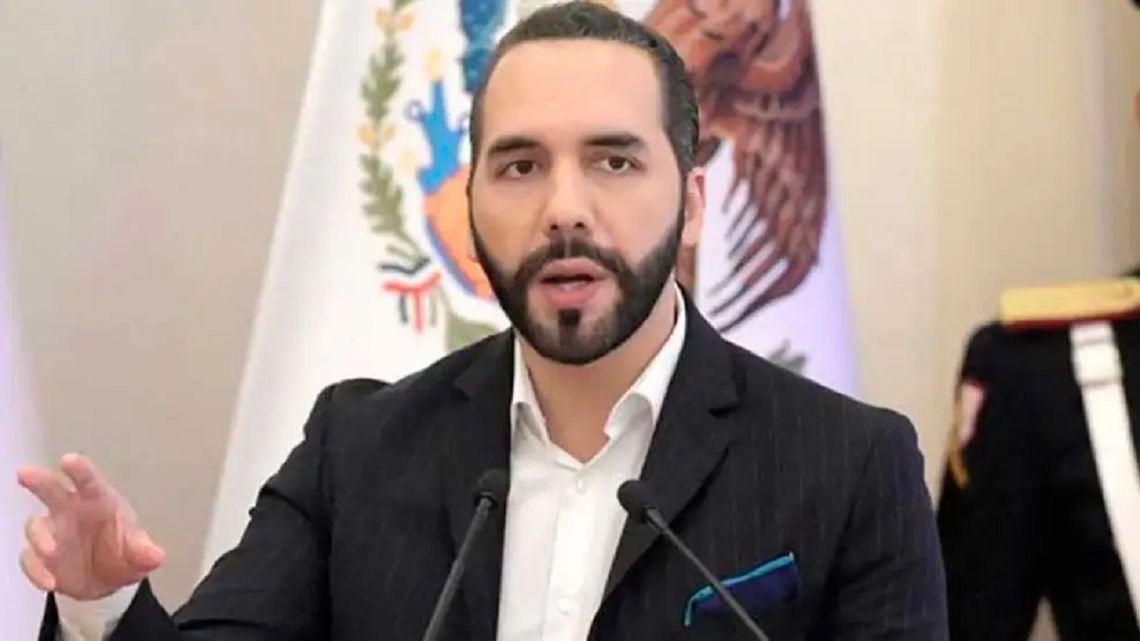
On February 19, U.S. President Donald Trump ceremonially welcomed representatives from nearly 50 countries to Washington to celebrate the first meeting of the Board of Peace, an organization he founded himself to initially oversee the ceasefire and the reconstruction of Gaza. In a lengthy speech, he announced that he had already secured $7 billion — contributed by Board members, including several Gulf states — to begin rebuilding the Gaza Strip.
A week later, however, he launched, together with Israel, a military offensive against Iran, which responded by attacking the Arab monarchies of the Persian Gulf. Today, just the repairs to the energy industries in those countries, which form the backbone of their economies, could cost between $35 billion and $60 billion.
To repair that infrastructure, the Gulf monarchies will need to invest a great deal of time and money. Their ability to simultaneously finance most of the reconstruction elsewhere in the Middle East, as many had hoped, is now highly uncertain. That points to a grim regional outlook amid a paper peace.
“The war against Iran has made the situation even worse because the [Gulf] countries will focus on their own economic recovery,” predicts Swiss-Syrian academic Joseph Daher. “But although the war has worsened these conditions,” he warns, “it is not the only reason.”
From Gaza to Sudan, from Libya to Yemen, and from Syria to Lebanon, the most conservative estimates put the combined cost of reconstruction at more than $1.5 trillion. In those countries much of the basic infrastructure lies in ruins, including hospitals, schools, housing, and electricity and water networks. But their capacity to recover is extremely limited.
“It is a complex situation,” says Abdallah al Dardari, director of the regional office for Arab states at the United Nations Development Programme (UNDP). “Whether you look at the value of what has been destroyed or the cost of reconstruction,” he adds, “the figure is going to be enormous.”
The shadow of Israel
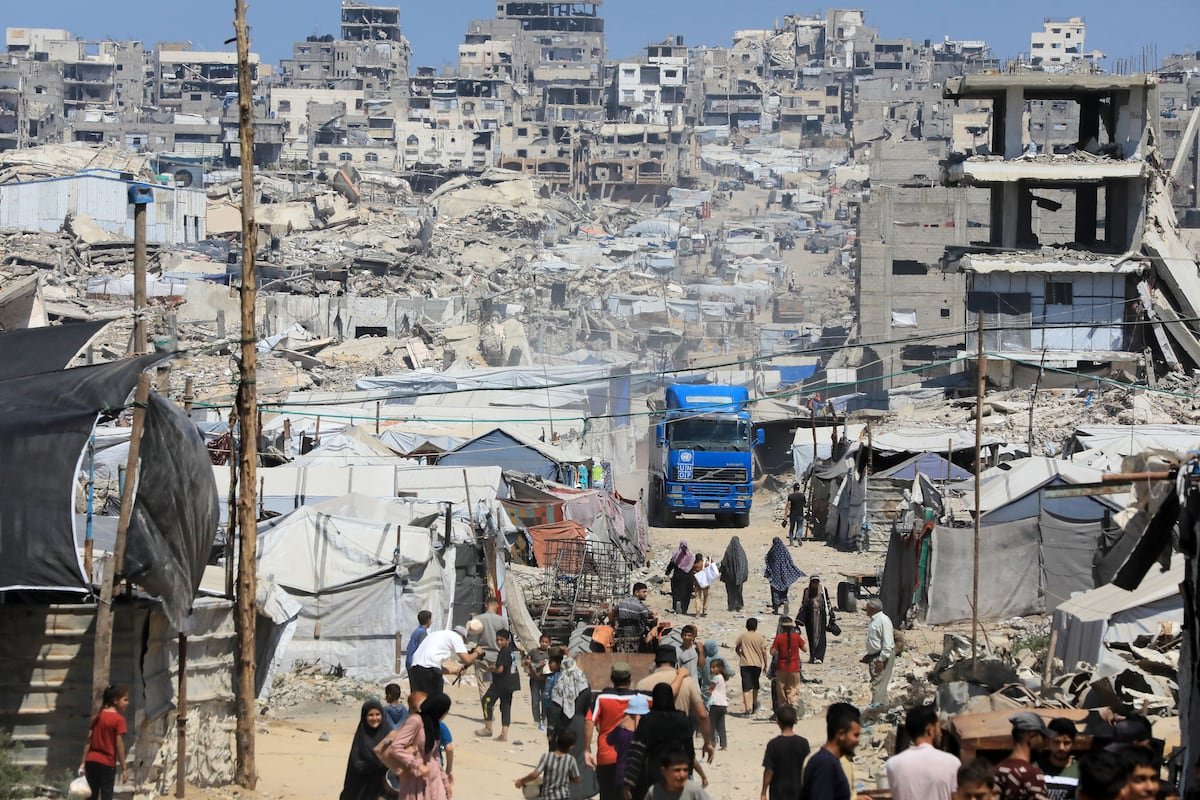
In Gaza’s case, more than 80% of structures are estimated to be damaged or destroyed by Israel, and its reconstruction is valued at around $70 billion. Yet despite fund pledges such as Trump’s February announcement, it remains unclear who should lead the process.
This governance gap becomes especially evident in the overlap of at least four reconstruction plans, including the dystopian U.S. project of a Middle East Riviera, another one drafted by Egypt, a third promoted by the Palestinian National Authority (PNA), and a final plan proposed by Israel in the areas of Gaza it continues to occupy.
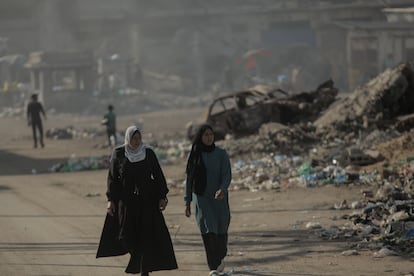
“One of the main parties responsible for this situation is Israel, so it should also pay for this destruction,” Daher argues. “I am highly critical of the economic policies of the region’s ruling elites, but we must include all responsibilities,” he adds.
For al Dardari, another key point is the affected countries’ lack of institutional capacity. “Even if there were a trillion dollars available, without institutions able to manage it nothing will happen,” he says. “That is why investing in institutional capacity and ensuring decent living conditions for the population are the two most important issues,” he notes.
One of the most talked-about cases last year was Syria, which after a decade of civil war saw the fall of Bashar al-Assad’s regime at the end of 2024 and the rise of the new government of Ahmed al Sharaa, which now faces the titanic task of rebuilding a country the World Bank estimates will cost more than €188 billion to reconstruct.
After the lifting of U.S. sanctions, Syria has announced investment agreements worth roughly $54 billion in sectors such as energy, aviation, ports and telecommunications, according to the Riyalpolitik website, which highlights interest from companies in Turkey, Qatar and the United Arab Emirates, as well as Saudi capital.
But many of these investment commitments have yet to materialize amid an adverse economic context compounded by obstacles such as Washington keeping Syria on the list of state sponsors of terrorism, which carries sanctions. Other risks working against them include lack of transparency, the new regime’s political future and repeated Israeli attacks.
In Lebanon, the 2025 election of Joseph Aoun as president and Nawaf Salam as prime minister was welcomed as a reformist turn after years of political vacuum and the destruction inflicted by Israel in the country, whose reconstruction needs are estimated at nearly $11.4 billion concentrated in the south and the southern suburbs of the capital, Beirut.
However, the renewed campaign of Israeli bombings and its occupation and destruction of a wide area of southern Lebanon is causing even greater damage in the country and has brought any momentum for reconstruction to an abrupt halt in a country that already faced severe barriers such as a technically insolvent banking system, regulatory failures and entrenched corruption.
Fragmented countries
Beyond the eastern Mediterranean, Sudan has been mired for more than three years in a civil war that has caused the world’s largest humanitarian crisis, fractured the country and left its state on the brink of collapse. Although the conflict continues, initial, broad-brush estimates by the authorities already value reconstruction at about $992 billion.
Prospects for peace, however, are very remote and the country remains split into two increasingly politically and institutionally isolated zones. In addition, a shattered economy, major logistical challenges, immense reconstruction needs and negligible international support mean its recovery options are very limited.
In neighboring Libya, where two rival governments coexist alongside countless armed groups in a very precarious balance of power, the World Bank estimated reconstruction needs at about $190 billion a decade ago, although since then there have been more cycles of hostilities and devastating disasters such as the cyclone in 2023.
Taking advantage of the cease-fire in force and deals among their respective kleptocratic elites, the western and eastern Libyan authorities have in recent years pushed opaque infrastructure megaprojects worth billions of euros that have benefited companies from Egypt, Turkey and the Emirates, as well as from Russia, Europe and the United States.
This political use of reconstruction, however, sidelines people’s needs. “Reconstruction is not an end in itself and it is not an opportunity for real estate investment; it is so societies can rebuild and regain control over their future,” Al Dardari argues. “The peoples of the region should not be spectators of what happens during reconstruction; they should own and participate in the process,” he urges.
In Yemen, years of war, foreign military interventions and internal fragmentation have damaged or destroyed more than one-third of the education network, 40% of health facilities, housing and sanitation infrastructure, and half of energy installations, according to a 2020 World Bank assessment that estimated the most basic reconstruction at $19 billion.
As in the previous cases, prospects for peace and reunification in Yemen, where there is also no viable nationwide state, remain very remote. Additionally, the scant international attention it receives makes its reconstruction horizon very unclear.
In this context, Al Dardari argues that “there is no shortage of money in the region” and points out that deposits in Arab commercial banks alone amount to $4 trillion. “The challenge is not a lack of money,” he says, “the question is whether we have the institutional structures, regulations and investment climate suitable to attract some of that capital.”
“Regional stability and security will be affected if we leave tens of millions of people living below the poverty line, displaced and without hope,” he warns. “Every day that passes without starting that reconstruction process means delaying the recovery of society as a functional, cohesive entity,” he adds.
Sign up for our weekly newsletter to get more English-language news coverage from EL PAÍS USA Edition