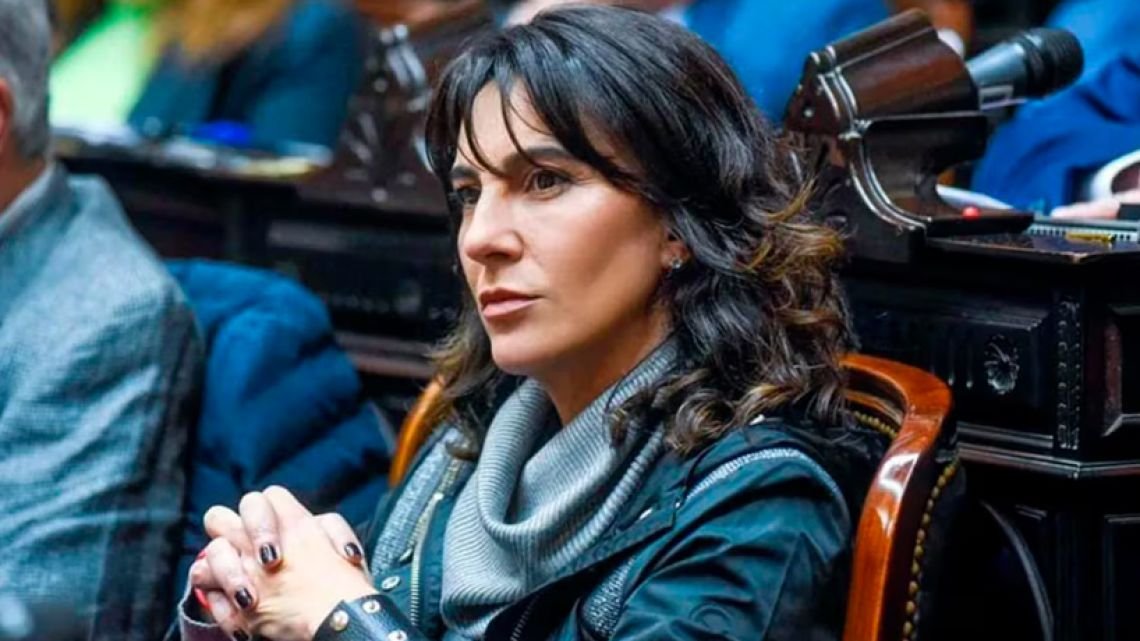
Are scientific laws enough to explain how the world works? Nancy Cartwright, 81, has spent more than half a century asking whether they really are. The philosopher has devoted her career to observing what happens when those principles are tested against concrete real-world cases: in hospitals, in economics, and in government public policy.
From an early age, Cartwright was surrounded by lofty ideas. The Calvinist upbringing she received in New Castle, Pennsylvania, led her to ponder questions that do not usually occupy the mind of a 12-year-old, such as the existence of God or the meaning of good and evil.
Her ideas have made her one of the most influential voices in contemporary philosophy of science. This reputation earned her the 2025 BBVA Foundation Frontiers of Knowledge Award in the Humanities, which was presented to her at the Euskalduna Palace in Bilbao, Spain.
Question. You have championed the importance of interdisciplinarity in scientific work. How much can be gained when different disciplines engage in dialogue?
Answer. When a discipline works in isolation, it can make significant progress in refining its tools. In biology, for example, controlled experiments allow us to isolate variables and better understand how a system functions. In physics, we can learn more about how to describe what happens when we study a cell under specific circumstances. Progress can be made in this way, but when you want to actually use that information to do something, suddenly, different knowledge and skills are required.
Q. Could you illustrate this idea with a specific research case?
A. One example I like is that of a high-precision experiment in physics, such as the design of instruments to test the theory of relativity. To build something like that, you need experts in materials, engineering, optics, and even fused quartz. The idea that only equations matter, or that a single discipline can explain everything, strikes me as odd. I’m not entirely sure where that belief originated.
Q. Your work challenges the idea that the world follows deterministic patterns. What implications does this view have for how we understand the capacity of science?
A. I don’t believe that everything that happens in the world is deterministic in the way we sometimes imagine it to be. There are relatively predictable processes that we know of, for very specific circumstances. If we were in a vacuum, in a controlled environment, and we dropped a ball, we could predict with considerable accuracy where it would land. That’s deterministic, because it happens time and time again. But if we drop the ball when there’s a magnetic field and the wind is blowing, then there is no reason to assume the outcome is deterministic. We like to think that it is, or could be, but we lack evidence.
Q. Your research has transformed our understanding of the relationship between cause and effect. What exactly does your work consist of?
A. It’s not just my work: I’m part of a whole generation of philosophers and social scientists. When I started out, the remnants of positivism and certain relativistic currents were still noticeable in the philosophy of science. Causality, meanwhile, was practically excluded from philosophical analysis. We had to figure out how to use it consistently in the social sciences.
Causes precede effects. Now, there may be some special cases in physics where this isn’t necessarily the case. The connection between cause and effect is related to a fact — because it is a mass, and a mass exerts an attraction on a body. We assume that they are probabilistically dependent, but this is not true in all cases. But if you’re in a field where you have reason to believe this is the case — such as with randomized clinical trials — you can demonstrate the unbiased effect of a treatment in a population you’ve studied using measurement methods, and that is verifiable.
Q. The jury of the BBVA Foundation Frontiers of Knowledge Award highlighted that your career underscores the importance of scientific evidence, at a time when rationality seems increasingly questioned. How do you interpret this climate of distrust toward science?
A. I’m not entirely sure I understand it in general terms, but I try to situate it within my own experience. I think, for example, of where I grew up, in Pennsylvania. There are people who have been unemployed for two generations, and they vote for Trump. I can understand why there’s distrust toward science or other forms of authority.
I think people have grown weary and feel that the system has abandoned them. But to explain this phenomenon properly would require tools more typical of sociology or anthropology, which I don’t currently possess.
Q. How has your research contributed to improving our understanding of economics and public health, specifically from the perspective of the philosophy of science?
A. In recent years, the work of researchers like myself, and the work done by the teams I’ve been part of, has become closely linked to development economics and public health, especially when it comes to discussions about how to produce reliable evidence for decision-making. A prime example is the rise of randomized controlled trials, heavily promoted by institutions like MIT [Massachusetts Institute of Technology] within the field of development economics. This approach has been a significant advance because it allows us to accurately measure the effect of specific policies or [state] interventions.
However, many of us have noted that there’s been a tendency to overemphasize this single method, as if it were enough on its own. The idea that a single type of evidence can solve all problems is, in my opinion, far too restrictive.
Q. You initially studied mathematics. Do you think that, at some point, it’s possible for the natural sciences to become detached from philosophy?
A. Natural philosophy existed before [the natural sciences] and the separation between the disciplines wasn’t as marked as it is today. The question regarding to what extent philosophy should connect with mathematics or physics is one that must be considered on a case-by-case basis.
When I was at Stanford, many physics students attended [philosophy] courses, because they felt their training had overloaded them with equations and they weren’t able to reflect on the meaning of these equations. So, they turned to philosophy, because philosophers allow themselves the space to ask those questions. And I’m not talking about grand philosophical questions: they’re interested in very specific questions.
Q. What kind of questions?
A. I studied the philosophy of quantum mechanics: it was about understanding quantum equations. For example, what does it mean for a system to be in one state or another, or how to interpret certain thought experiments like Schrödinger’s cat. These are questions that arise within scientific practice itself, but they require a different kind of perspective.
The philosophy of science, as I’ve experienced it, has given people space to think about questions that scientists don’t have time to address. But there are simply too many questions. Perhaps they should first ask themselves what they need to think about. I believe that philosophy gives us greater scope for understanding.
Sign up for our weekly newsletter to get more English-language news coverage from EL PAÍS USA Edition