The year 2025 will be a watershed for Brazil, at least in the tourism sector. Never before had so many tourists set foot in the tropical country, which is ending the year with over nine million foreign visitors, 40% more than in 2024, according to official figures. Argentinians are particularly numerous, numbering over three million, an 80% increase compared to last year. They are followed by Chileans, Americans, and Europeans like Cecilia, a German woman visiting Brazil for the seventh time: “Of course I understand this increase; what’s strange is that it didn’t happen sooner,” she says from Rio de Janeiro, equipped with the classic beach gear: sunscreen, sunglasses and coconut water in hand, ready to watch the famous sunset over Arpoador Rock. When asked to explain the reason for this sudden surge in visitors, she pauses for a moment and replies: “I know Brazil has many problems, but Brazilians always seem happy.”
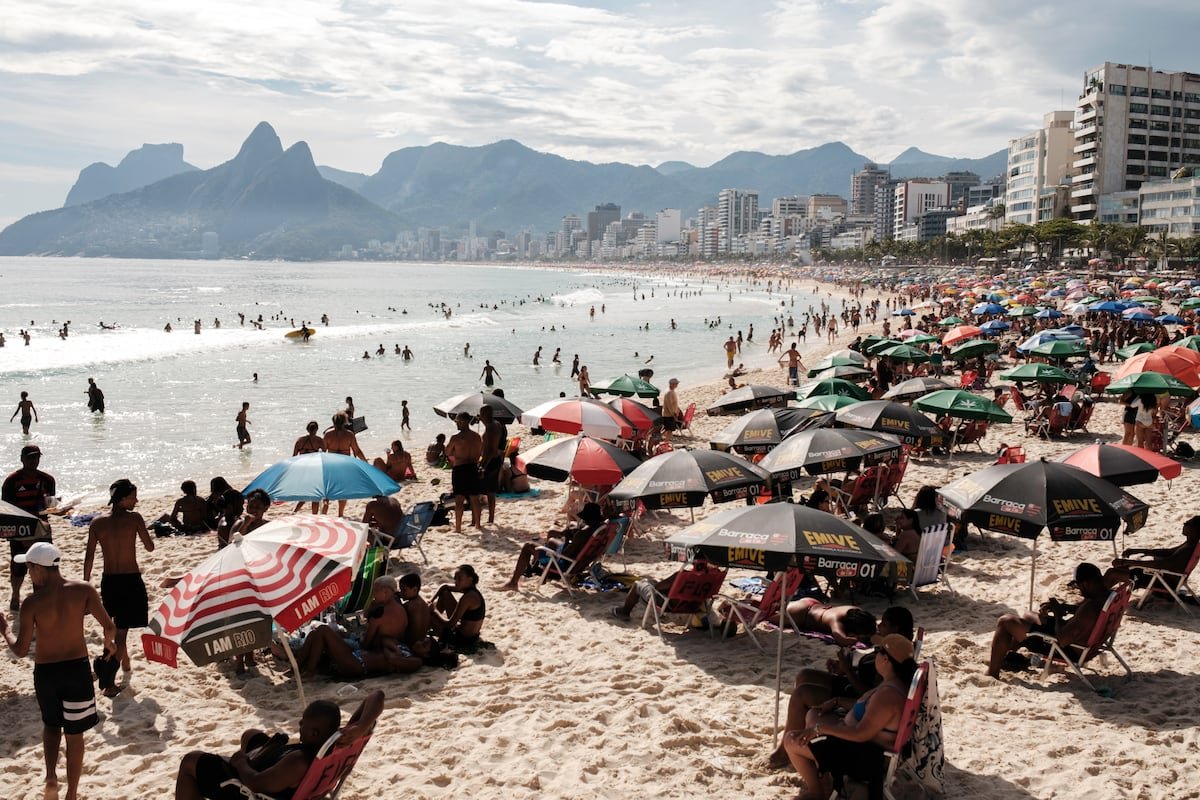
The sudden growth is noticeable throughout the country, but especially in its postcard to the world, Rio de Janeiro. The “Marvelous City” is the main gateway, and on Copacabana beach, at the very start of summer in the Southern Hemisphere, there’s not a spare inch of space. Tourists like Cecilia wander these days along the Copacabana boardwalk in front of a large screen that displays, in real time, the number of visitors arriving in Brazil. The number changes every few seconds and is already approaching nine million. It’s a metaphor for a country that is growing stronger after years of stagnation.
Despite its continental size and enormous potential, Brazil is far behind the regional champion (Mexico, with 45 million tourists last year), but increasingly close to the silver medalist, the Dominican Republic, whose Caribbean resorts welcomed over 11 million visitors. It is hoped that this year Brazil will overtake Colombia and finally enter the Latin American podium. Tour operators often (or used to) argue that Brazil’s main obstacle is distance, both external (it is far from the main source markets, Europe and the U.S.) and internal, because in a country of continental size, domestic travel takes days, requires complicated logistics, and increases the cost of any plan. Even so, its appeal outweighs the disadvantages. This year, it has been the fastest-growing country in the Americas and the second fastest-growing in the world, surpassed only by the tiny islands of Vanuatu. Not even during the golden age of the World Cup and the Rio Olympics (2014-2016) did Brazil receive so many tourists.
For the authorities, the boom is the result of a mix of factors. Outgoing Tourism Minister Celso Sabino explained to EL PAÍS that one of the keys has been facilitating arrivals: “Brazil has worked very hard to expand its air connectivity,” he said. In the first half of the year alone, seat capacity on international flights to Brazil increased by 15% compared to the same period in 2024. This trend is expected to continue next year. The Spanish airline Iberia, for example, has already announced the opening of new direct routes from Madrid to Fortaleza and Recife, two sun and beach destinations in the northeast, and an increase in flight frequencies to Rio.
The Brazilian government has doubled its investment in tourism fairs and advertising campaigns around the world, focusing on increasingly popular segments such as Afro-tourism and community-based tourism in indigenous territories. This year, the Amazon region and the city of Belém do Pará, its gateway, have also been heavily promoted. This Amazonian capital, famous for its extraordinary cuisine, recently hosted the COP30 climate summit, which the government strategically used as a showcase to promote the entire region. As part of the summit’s legacy, the city opened new museums, restored part of its historic center, and dredged its port to accommodate large cruise ships. Convinced of the potential of this corner of the world, still largely unknown to foreign visitors, the government also inaugurated the country’s first National School of Tourism there.
According to the minister, the figures demonstrate that the image of insecurity that many tourists, especially Europeans, have in mind when they think of Brazil is not an impediment. “The sector has attracted foreign direct investment, and no international investor would put millions of dollars into a country perceived as unsafe. Success speaks louder than negative narratives that generalize isolated incidents that can happen anywhere in the world,” he emphasized.
In Rio de Janeiro, where a police operation against drug trafficking in November left 122 dead in the city’s northern outskirts, tourists remain oblivious to the routine shootouts that occur many kilometers away from the tourist beaches of the South Zone. The city council has made tourism an absolute priority and in recent years has strived to extend the tourist season beyond the summer months and Carnival in February. The free mega-concert by an international star in Copacabana has become a firmly established tradition in May. In 2024 it was Madonna, and this year it was Lady Gaga, who broke a record by drawing two million people to the country’s most famous beach. Hotels are overflowing, business owners are happy, and so are the residents, pleased to boast of a city that, despite its daily challenges, is capable of organizing major events with flying colors. Between January and November, 11.4 million tourists visited Rio (mostly Brazilians; two million were foreigners), generating an economic impact of 24.5 billion reais (almost $4.5 billion), according to data from the mayor’s office.
The numbers are already noticeable on the streets, and not just under the coconut palms on the beach. Until a little over a decade ago, Rio only saw crowds of tourists at its two most famous attractions: Sugarloaf Mountain and Christ the Redeemer. Today, the city is already beginning to have some “sacrifice zones.” Samba Mondays at Pedra do Sal, the colorful Selarón Steps, and the charming mansion in Parque Lage are some of the first victims of this new wave of tourism, corners where the locals are already becoming an endangered species.
The historic center, in a slow but steady process of revitalization, is the next frontier. Senado Street, in the Lapa neighborhood, was just named by Time Out magazine as “the coolest street in the world in 2025.” Meanwhile, the real estate market and major investors aren’t wasting any time: construction companies are taking advantage of public incentives to create housing in the city center by renovating old buildings and converting them into short-term rentals. Entire blocks and some iconic buildings, like the A Noite skyscraper, are being rapidly transformed into Airbnb hives. But unlike what is happening in many European cities, with residents exhausted by so many tourists and gentrification, in Rio tourism faces no resistance; there isn’t even minimal regulation for tourist accommodation. It’s still manna from heaven. For now.
Sign up for our weekly newsletter to get more English-language news coverage from EL PAÍS USA Edition