The tech trial of the century pits Elon Musk against Sam Altman in a California courtroom battle that has it all: money, betrayal, egos, and the future of the most disruptive technology of our time, artificial intelligence (AI). Musk and Altman dominate the headlines, and their statements go viral within seconds, partly because they are such singular figures.
But the real story of who controls AI isn’t unfolding in that courtroom, nor is it limited to those two men. It’s taking shape in Abu Dhabi’s meeting rooms, in the discreet offices of a fund in Hangzhou, and in the data centers rising in the Texas desert. There are many more players, but these nine individuals are quietly deciding — far from press conferences and social‑media fights — how the technology that will change everything is built, financed, and governed. These are their profiles.
Jensen Huang: The infrastructure
No one in the history of technology has had so much power over an industry without having any direct involvement in it. Jensen Huang, 62, born in Tainan, Taiwan, co-founded Nvidia in 1993 in a San Jose Denny’s with $40,000 in capital. In 1996, the company was a month away from bankruptcy. He bet everything on an unproven chip — the RIVA 128 — and saved the business. Since then, he has turned that obsession with survival into a corporate philosophy: he tells his employees that the company is always “30 days away from going under.”
What no one anticipated was that chips designed for video games would be the perfect infrastructure for training artificial intelligence models. By the time the world realized this, Nvidia was worth $3 billion, and Huang had tattooed the company’s logo on his left shoulder. Today, without its CUDA architecture, which is two decades ahead of any competitor, there would be no OpenAI, no Google DeepMind, no Anthropic, no DeepSeek. All the chatbots we know have been trained on Nvidia’s silicon chip.
In 2026, Huang was appointed to the U.S. President’s Council of Advisors on Science and Technology. Major financial magazines have named him the best CEO in the world. The black leather jacket he wears at every presentation has become a symbol of power, much like Steve Jobs’s turtleneck sweater once was. Huang doesn’t write the algorithms or sign the contracts: he simply controls the single gateway everyone needs to use.
Larry Ellison: Old-school power
Larry Ellison is 81 years old, and he has the kind of patience that only comes from having built a company over nearly 50 years. He founded Oracle in 1977 with a CIA contract. For decades, he periodically ranked as the richest man in the world, and he became known for his extravagant lifestyle — from America’s Cup sailing competitions to buying an entire island, Lānai, in Hawaii.
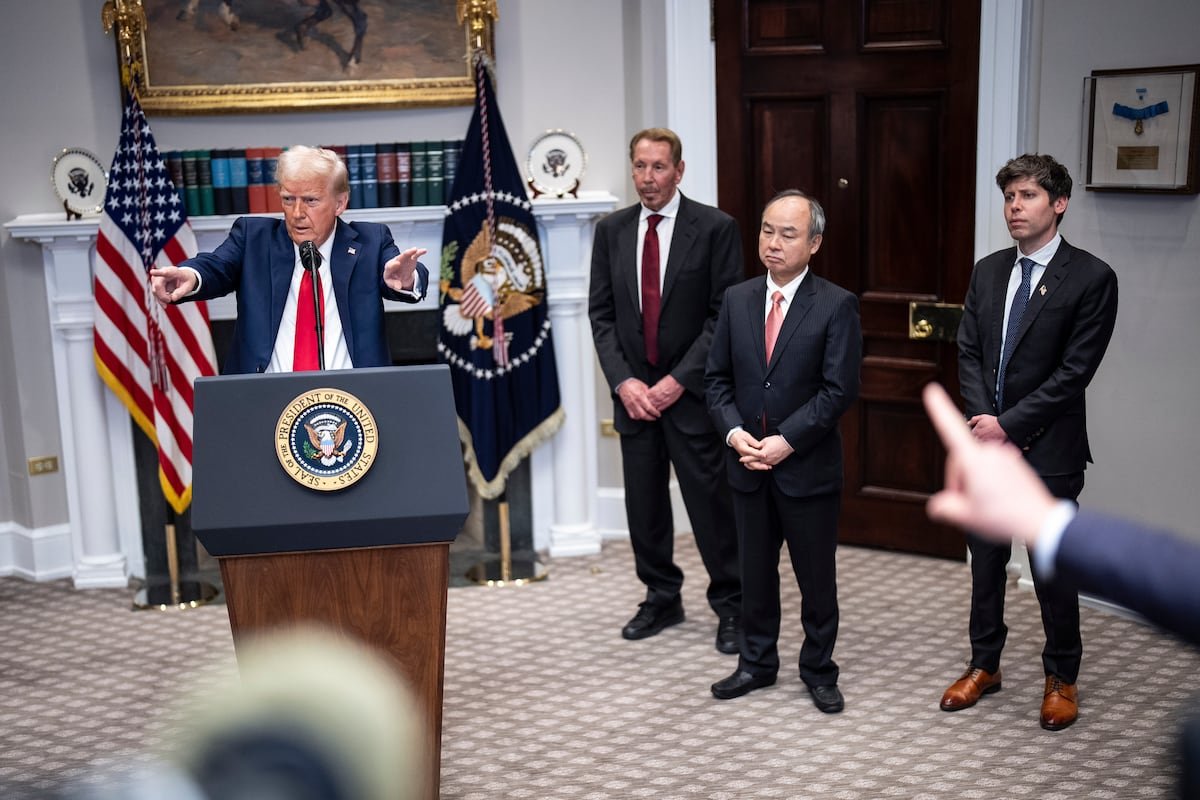
When AI took off, Ellison did what he has always done: identify the piece of infrastructure everyone will need — and get there first. The breakthrough came in September 2025: a $300‑billion contract with OpenAI, the largest cloud‑computing deal ever signed, along with his stake in Stargate, the half‑trillion‑dollar project announced at the White House alongside Trump. The man who in 2008 called cloud computing “complete gibberish” is now its chief architect.
Masayoshi Son: The gambler
Masayoshi Son is not an investor. He’s a gambler — on a colossal scale. His biography includes the largest personal capital loss in history: during the dot‑com crash, he lost $70 billion. He came back. Then he bet on WeWork and lost billions more. He came back again.
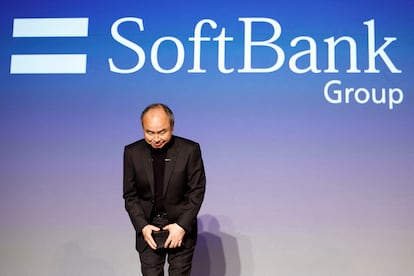
He now chairs Stargate, has invested $41 billion in OpenAI, and has proposed a half‑trillion‑dollar complex in Arizona to build the physical and energy infrastructure needed for the next generation of AI. Son has stopped investing in China — “zero,” he says — and has reinvented himself as the great financier of America’s AI dream.
Marc Andreessen: The ideologue
Marc Andreessen doesn’t build models, chips, or data centers. He does something more difficult: he writes the mental script that many of the AI billionaires use to decide where to put their money. He co-founded Netscape, the first internet browser, and then created Andreessen Horowitz (a16z), the fund that has financed Facebook, Airbnb, and the leading AI startups of the last decade.
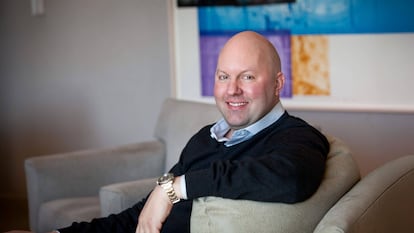
In 2023, he published his Techno-Optimist Manifesto, a 5,000-word document declaring that halting AI amounts to “a form of murder.” It also named the “patron saints” of the movement, listing figures such as Nick Land, the father of dark accelerationism, a philosophical current that is openly anti‑democratic. Andreessen had been a Democratic voter for decades. But Biden’s proposal for a minimum tax on billionaires pushed him toward Trump, whom he actively funded in 2024. His reflections on how capitalism should dismantle democracy through technology are embraced — more or less explicitly — by many of the major leaders in AI.
Peter Thiel: The architect of chaos
Peter Thiel displays an unusual trait in Silicon Valley, at least as it used to be: he doesn’t need to be liked. In a James Bond film, he and his partner Alex Karp would be more villainous than the villain. He backed Trump when it was the most unpopular thing a tech magnate could do, he launched JD Vance’s political career with a record‑setting $15‑million donation, and placed his former chief of staff as a key adviser to the president. The White House’s AI policy today reflects his obsessions: radical deregulation, skepticism toward any body that might place limits on technology, and an unapologetic push for a militarized, anti‑democratic vision of AI.
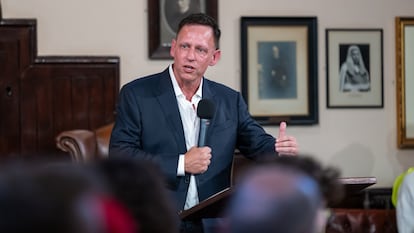
He co‑founded PayPal with Musk and later created Palantir, a data‑analysis company for governments and militaries, initially funded by the CIA’s venture‑capital arm and now considered one of the greatest human‑rights risks in the history of technology.
What’s remarkable about Thiel isn’t his money: it’s the effectiveness with which he has exported his ideology. His PayPal partner, David Sacks, is now Trump’s AI czar. And he and Karp recently published a manifesto calling for AI to be placed directly at the service of defense and the “technological supremacy” of the West. Thiel doesn’t build chips or train models. He builds the mental and political framework within which everyone else operates.
Reid Hoffman: The ‘connector’
He’s the man everyone knows, and everyone calls. He co-founded LinkedIn, was vice president of PayPal, an early investor in Facebook and Airbnb, and one of the first funders of OpenAI, where he served on the board for five years. His value wasn’t in any particular company, but in being the hub the entire ecosystem turned to for advice and connections.
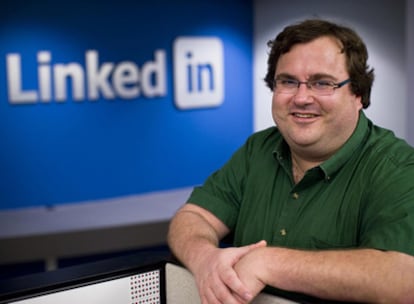
However, in 2025, he lost his seat at OpenAI due to conflicts of interest: his startup, Inflection AI, was acquired by Microsoft. His Democratic leanings left him without influence in the Trump administration. Now he is isolated from the new axis of power (Trump, Musk, and Thiel). The question that Hoffman embodies better than anyone is whether networking power has an expiration date when the network changes its structure and ideology.
Daniela Amodei: The invisible power
In an industry where the founders of major AI labs hold PhDs in computational physics, Daniela Amodei arrived with a degree in English literature. In 2018, she joined OpenAI as vice president of security and policy. In 2021, when her brother Dario and several colleagues concluded that the pace of commercialization was incompatible with truly safe AI, they founded Anthropic. She is the president. Dario is the CEO.
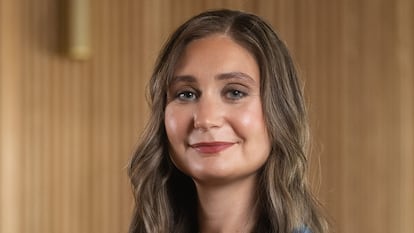
Today, Anthropic generates $4 billion in annual revenue and is the AI of choice for major corporations. In 2025, the Pentagon excluded it from its AI contracts, sparking a political and business battle that made Anthropic the epicenter of the war for the future of military AI. Daniela Amodei leads everything that isn’t pure research: operations, strategy, culture, partnerships, and talent. In 2025, Forbes included her on its list of the 100 most powerful women in the world. Her name appears far less frequently than her brother’s in the media, but she is, in the words of an early investor, “the execution engine that makes the lab function.”
Sheikh Tahnoon bin Zayed Al Nahyan: The petrodollars
His name doesn’t come up in discussions about AI regulation. He doesn’t give interviews. He has no social media profile. And yet, Sheikh Tahnoon bin Zayed Al Nahyan, brother of the president of the United Arab Emirates (UAE) and national security advisor, controls more than $1.4 trillion in assets.
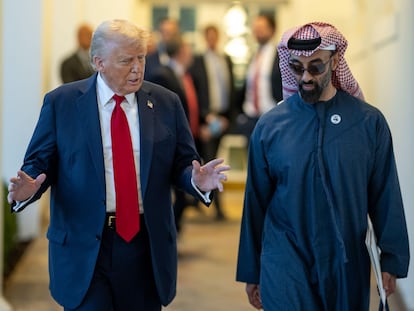
In 2024, he launched MGX, which in less than two years has become one of the largest funders of global AI: it has invested in OpenAI, Anthropic, xAI, and Binance, and is a founding partner of Stargate. The most disturbing dimension of his power is the one no one discusses openly: one of his companies (G42) has been accused of developing espionage tools for the UAE, and negotiations to create a customized version of ChatGPT for the UAE include content tailored “to the monarchy’s political line.”
Liang Wenfeng: Chinese power
On January 27, 2025, Nvidia’s stock plummeted $589 billion in a single day, the largest destruction of market value in history. It happened because of a 40-year-old man with “a terrible haircut,” as one of his associates described him upon meeting him.
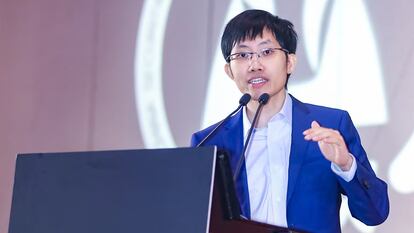
In 2021, when U.S. sanctions restricted China’s access to high-end chips, he bought thousands of permitted GPUs and started an AI project. The result was DeepSeek R1: a model trained on 2,048 chips with a budget of $5.6 million that rivaled GPT-4 and proved that Western sanctions on technology don’t work as expected. He’s the man who instilled the most fear in Silicon Valley and the White House in 2025. Almost no one knows how to pronounce his name, but Wenfeng’s is likely the one that will be heard the most from this entire list in the coming years.
Sign up for our weekly newsletter to get more English-language news coverage from EL PAÍS USA Edition