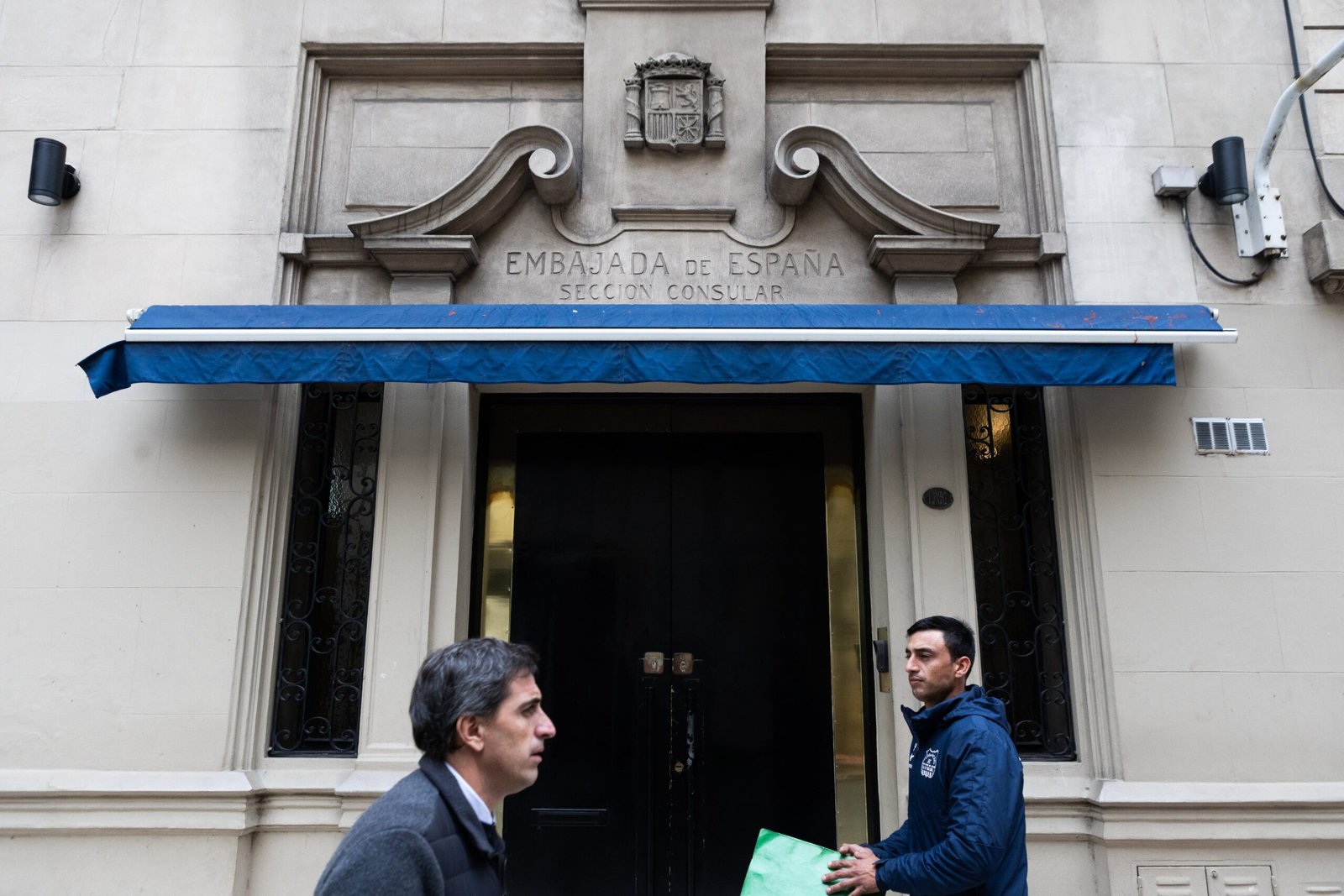
The leader of the opposition in Spain, Alberto Núñez Feijóo, of the mainstream conservative People’s Party, lashed out this week at the Democratic Memory Law, popularly known as the ley de nietos or Grandchildren law, which grants Spanish nationality to descendants of Spaniards who went into exile or emigrated. “It’s electoral engineering, a move to get new voters,” he said, accusing the Socialist prime minister, Pedro Sánchez, of using it to “manufacture new voters.”
A total of 2.45 million descendants of Spaniards in several countries have requested appointments to apply for citizenship under the law, approved in June 2022 despite opposition from the right. However, it is now that Feijóo has been most explicit in his criticism because of the effect this could have on election outcomes since, like other citizens, these new Spaniards have the right to vote.
Feijóo, who tops voting-intention polls if there were an election in Spain today (it is scheduled for next year), has repeatedly insisted this week that this law is a case of “electoral engineering.” “Since the current voters don’t add up for Sánchez, he’ll see if by manufacturing voters he can make the numbers work.” On Thursday of this week, however, the PP leader said that his party supports citizenship rights for the grandchildren of all Spanish émigrés, and not just of those who went into exile following the Civil War (1936-39) and subsequent dictatorship under Francisco Franco.
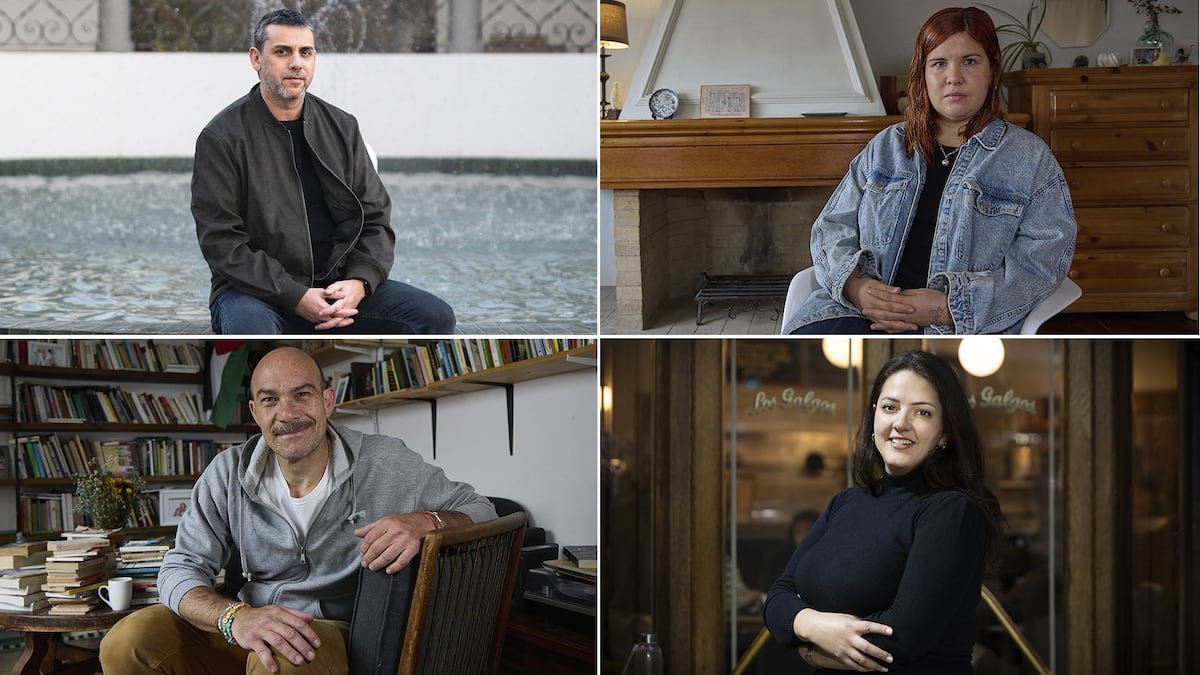
Below is the testimony of six people who obtained Spanish nationality under this law in Mexico, Cuba, Argentina and Austria:
Laura Gabián, 34. Argentina: “Migration between Spain and Argentina is a two-way road”
By Mar Centenera (Buenos Aires)
Argentine graphic designer Laura Gabián (Buenos Aires, 34) was on her way to the Spanish Cultural Center this Tuesday when she took some time out for this interview with EL PAÍS. Her path back to her roots in the Spanish northwestern region of Galicia began in 2022, when she started caring for her 93-year-old grandmother in her final months. She fed her, washed and dressed her in a house south of Buenos Aires filled with mementos of the land she had reluctantly left behind in the aftermath of the Spanish Civil War, in search of a better future. Gabián remembers a Galician doll with red skirts, small pictures of bullfights and other adornments from the other side of the Atlantic. Her father had inherited Spanish nationality, but she, who could have claimed it until age 21, never did and the deadline passed.
In 2022 she was 31, and watching her grandmother’s life fade away, she began to consider her own origins. When she learned the Spanish government had approved the Law of Democratic Memory, she went to the consulate with all the required documents. “I submitted the papers on April 10, 2023. On July 24, 2024 they sent me the email saying I had acquired nationality,” she recalls. “I was very happy because it meant recovering part of my identity. The children and grandchildren of Spaniards are part of Spain’s identity, from a time when many people had to emigrate,” she says. The migratory flow then ran toward Argentina; today it runs in the opposite direction, but what will happen in the future is uncertain: “It’s a two-way road, a circle in which both countries seek to be each other’s refuge and do not always succeed.”
Her brother, who is six years younger, is still waiting for nationality and fears he will not obtain it if the People’s Party’s plans to suspend the law succeed. “He submitted the papers in February 2024, but received no response,” she says, sounding worried.
Her grandparents returned to their homeland in 2001, but five years later they packed their bags again. “They were dying to return to Galicia and hoped we would go there too. But they missed us a lot and discovered that the world they had left no longer existed, so they came back here, finally at peace. My grandmother shed the nostalgia that had marked her whole life and began to enjoy Argentina,” she recalls. At the same time, Gabián began a path in the opposite direction. Immersed in family history, she collaborated with a friend on a play about another immigrant grandmother, in this case Italian, The Queen of Turdera.
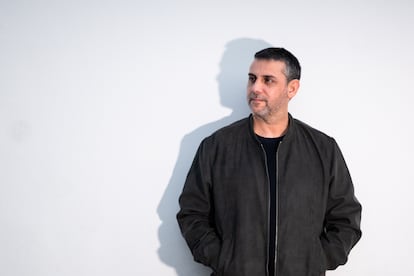
Cristián Jaramillo, 49. Chile: “Spanish nationality is a bond with my grandparents”
By Antonia Laborde (Santiago)
Chilean advertising executive Cristián Jaramillo, 49, obtained Spanish nationality and is processing citizenship for his 14-year-old son and his 11-year-old daughter thanks to the Democratic Memory Law. His maternal grandfather, Ángel Cereceda, was born in the early 20th century in Logroño, in the small northern Spanish region of La Rioja, and came to Chile in the 1940s after fighting in the Spanish Civil War on Franco’s side while still a minor. “He was 16, he didn’t know what he was fighting for,” Jaramillo recalls.
Upon arriving in the South American country, he integrated into the expatriate community seeking a second life in Chile and, at a dance at the Spanish Circle, he met Lidia Jimenez. She was a Chilean daughter of Spaniards from La Rioja whose father had recently helped found the Spanish Stadium. They married soon after and had three children, one son and two daughters. One of them, María Angélica, is Cristián’s mother. That generation received their First Communions and took part in sporting and social activities at the stadium, but they did not have Spanish nationality. For years they tried to obtain it, but Ángel, then elderly, did not have his documents at hand or remember the office where his birth had been registered.
After decades searching for the grandfather’s papers in Spain, a relative of the Jaramillo Cereceda family found a document in the city of Pamplona, where Ángel had been adopted into a home as a boy. With that piece of paper, María Angélica was able to apply for Spanish nationality in the late 1990s, but not so her children because they were over 18. “The law has opened that door for us. What the law does is extend the possibility one generation further,” says Cristian, whose children’s registrations are being processed. He takes them at least four times a week to the Spanish Stadium, where he also went as a child with his grandparents. “We try to participate in the La Rioja community, in the October 12 (National Spain Day) celebrations. It’s our way of connecting,” Jaramillo says. “For me, Spanish nationality is a bond with my grandparents, a way to understand my origins. I haven’t even used it to travel; I haven’t been to Spain,” he adds. He still remembers the shrapnel in his grandfather’s body and the psychological damage caused by fighting in the war.
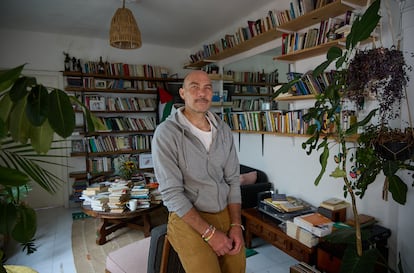
Felipe Gómez, 44. Mexico: “I see no reason to consider this law a threat”
By Beatriz Guillén (Mexico)
Sometimes identity is preserved in the way that codfish is prepared or in saying torrejas instead of torrijas. That was the case in Felipe Gómez’s home; he is 44, Mexican and the grandson of Spanish exiles. This teacher and translator noticed how differently holidays were celebrated in his father’s family, whose roots trace to Noja in the Spanish northern region of Cantabria. His great-grandfather Ramón Ruiz Rebollo had been a congressmember during the Second Republic and had to flee with his 11 children to Mexico because of persecution by Francisco Franco. They arrived on the ship Flandre at the Port of Veracruz in 1939, and a few months later ended up in Mexico City. Encarnación Ruiz was the eldest of those siblings and the “favorite” of her grandson. From her, Gómez learned that identity is something you build: “Memory is lost. Memory is these threads you must keep weaving. Literally, my grandmother knitted and now I have to take those threads and keep knitting to remember.”
Gómez applied for Spanish nationality in 2010, three years after the approval of the Historical Memory Law that allowed children and grandchildren of exiles to access citizenship. That legislation was expanded in 2022 with the Law of Democratic Memory, the one that Feijóo has called “electoral engineering” by the PSOE to win votes. Gómez finds that notion “naïve”: “It seems to me like a Manichean political discourse and nonsense. To think this law could affect interests at the state or national level in any political sense… I see no reason to consider this law a threat.”
This scholar of cultural policies and English literature has never exercised his right to vote in Spain in these 16 years, although on one occasion he did receive the forms to do so, and another time his aunt told him it would be important to vote, but he didn’t make it in time. He completed the citizenship procedures for “identity” reasons. It is for the same reason that his daughters now attend Colegio Luis Vives in Mexico City, founded by Spanish exiles, or why he gets emotional hearing the song Gallo rojo, gallo negro, which became a favorite among anti-Franco activists. “I identify my Spanishness in that left-wing struggle for justice, for democracy.”
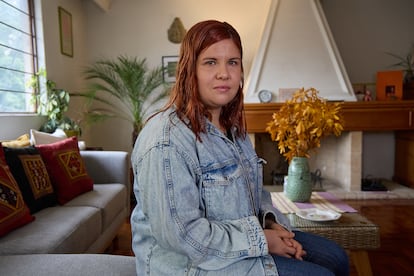
María Fernanda Sánchez-Armáss, 36. Mexico: “We thought it would be valuable to have dual nationality”
By B.G. (Mexico)
It was just a month ago that María Fernanda Sánchez-Armáss was notified that she had obtained Spanish nationality. This film producer and her family applied to the so-called Grandchildren law in April 2025: she from Mexico City, and her aunts from Washington, Boston and California. The U.S. applications were processed faster than hers, so she is still waiting for her Spanish passport. She wants it because she would like to do a master’s degree in film distribution at the Elías Querejeta Zine Eskola in San Sebastián, in Spain’s northern Basque region, one of the few places that offers it. “That’s one of the reasons,” she says. “We also thought it would be valuable to have dual nationality. In addition, it opens many more options for international funds, funds like Ibermedia or Spanish funds to be able to make film co-productions.”
As for the idea that she would become a PSOE voter, as claimed by the PP, she finds it shocking: “I hadn’t thought about it that way at all. We even wondered what would happen if we didn’t vote. Because on the application they ask you where you want to vote. But as long as I live in Mexico, I feel that the most responsible choice would be not to vote in Spanish elections at all.”
Her great-grandfather, Fructuoso Blanco-Rodríguez, arrived in Veracruz in September 1907. He was a 27-year-old merchant from Gijón, in the northern region of Asturias. One of his daughters, María del Consuelo del Perpetuo Socorro Cázarez, María Fernanda Sánchez-Armáss’s grandmother, was born in Guanajuato. Obtaining Fructuoso’s birth certificate was the most complicated part of the process; later her grandmother was naturalized and then they all were. “I had heard about the law, but thought it was very out of reach,” the filmmaker says. Her grandmother, who died in December, did not live to see her granddaughter become Spanish.
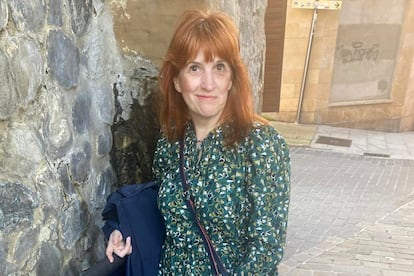
Tania Sánchez-Juárez, 49. Austria: “I recovered my nationality out of affection”
By B.G. (Mexico)
Rosa Herranz’s journey from Ávila fleeing Francoist repression included French internment camps, Algeria, Casablanca and, finally, one of the last ships bound for the Port of Veracruz. She arrived in Mexico in October 1942. The story of Fermín Zugazagoitia, the eldest son of the socialist Julián Zugazagoitia —a journalist and interior minister under President Juan Negrín— was similar after his father’s execution. He arrived in Mexico in 1941. In Mexico City, the two exiles met, fell in love and founded a family. Mexican law at the time allowed only one nationality, so Fermín naturalized as Mexican and his daughters did the same. That, for a long time, led his granddaughter, Tania Sánchez-Juárez Zugazagoitia, to believe she would not be able to recover Spanish citizenship: “I was left with nothing.”
This international relations expert, who studied political science in Mexico and Sweden and has lived in Vienna for 19 years, was about to opt for Austrian nationality after marrying there, but then Spain’s Historical Memory Law was approved. She did not hesitate. “Because of my origins, my pride, my love and history, I said: ‘No, I am not Austrian, I have to recover what is mine because I have very strong Spanish roots; I have to submit the papers,” she now says by phone from Vienna. “I did it in 2009 and for 17 years I have proudly held Spanish and Mexican nationality.” On her father’s side, she says, she is a descendant of Benito Juárez, the Mexican president and a decisive figure in the country’s history. “Politics runs in my veins,” she jokes.
She has voted from Austria: “I vote, also, as a European citizen. I have the right to vote and I think I also have the obligation.” For Sánchez-Juárez, the PP leader’s remarks are “a disappointment and an insult”: “This is not electoral engineering. Voting is our right as citizens. I recovered my nationality out of affection. I did not go to Spain to use Spaniards’ resources, as the right also claims.”
Tania was able to travel to Spain with her grandparents before they died: “They were very afraid of being rejected there. But they saw that the government had changed.” For her, the Law of Democratic Memory is above all “a recognition of people who suffered such a profound loss.”
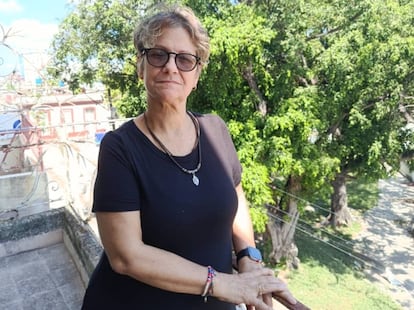
Valia González, 64. Cuba: “I would like to go and come back, because it is my right”
By Sergio Murguía (Havana)
Valia González García’s story in Cuba begins when her grandparents arrived on the island fleeing Francoism after the Spanish Civil War. From childhood, this 64-year-old Havana native heard the stories they told about family life in Galicia, about the longing for what they had to leave behind to save their lives and seek a better future abroad.
Granddaughter of a Madrileña and a Galician, though born and registered in Cuba, Valia treasures the trunk her grandparents used to travel to settle in Havana, in a house in El Cerro. There they kept all their travel documents, as if they wanted to leave their descendants a clear path to benefit from a law intended to repair and honor 20th-century Spanish exiles through their children and grandchildren.
“The law has been positive,” Valia González says from her home in west Havana, seeing her roots and the emotional ties to her ancestors’ place of origin recognized by the law. “I wanted to apply for nationality because it was about my maternal grandparents, from whom I always heard all those stories about the life they left behind in Spain. I understood that that was also my right.”
In October 2024 her application was approved and in January 2025 she received her Spanish passport. However, she has not yet visited the country her grandparents came from. “I would like to go and come back, because it is my right. It’s the possibility of having a passport with which I can go, visit Spain without complications, without needing a visa, without all the prejudices that may exist, without all the problems there are. If one day it were possible, of course I would like to live there.”
Valia says her current financial situation prevents her from traveling to Spain, but it reassures her to have the Spanish passport, as if it were a safe-conduct to escape at any moment the suffocating reality Cuba has become, a country where, she laments, “we have no guarantees, no prospects, no hope, we have nothing.” And to those who question a law that has benefited hundreds of thousands, Valia is blunt: “Let each person use it as they wish, because it is their right.”
Sign up for our weekly newsletter to get more English-language news coverage from EL PAÍS USA Edition