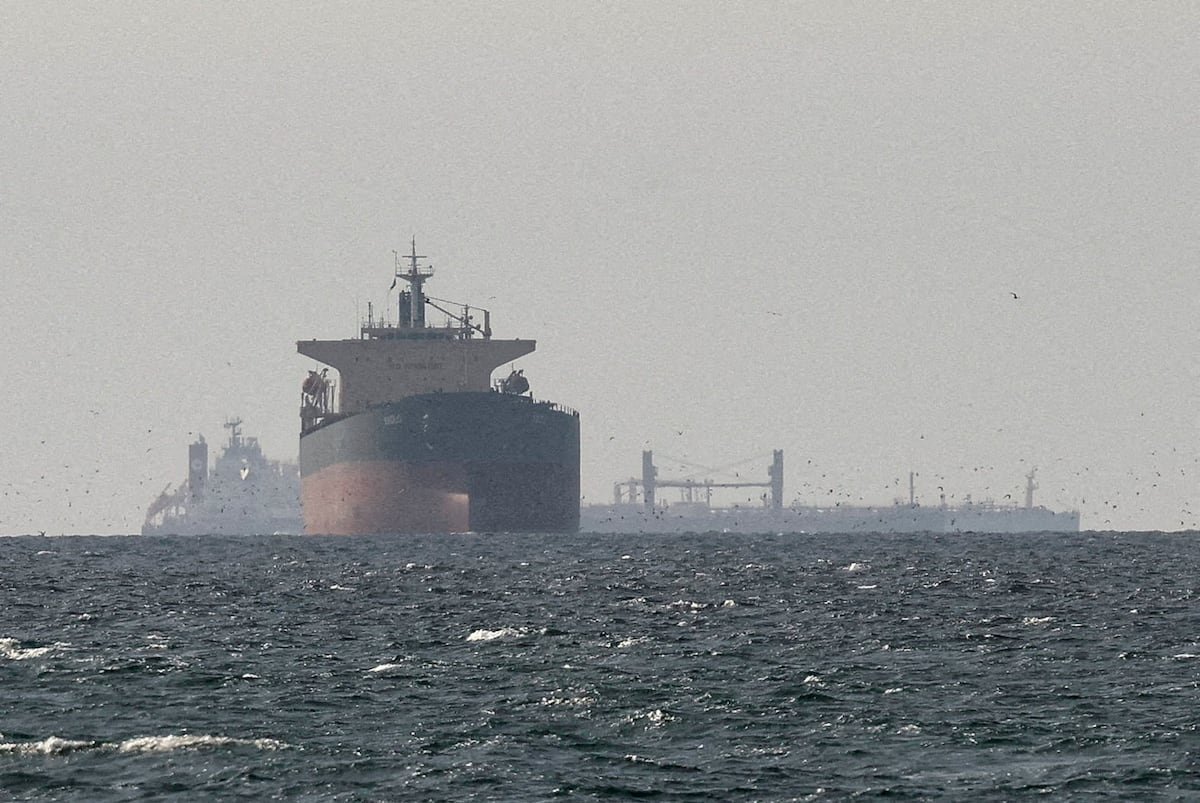
Iran announced on Friday that the Strait of Hormuz will remain “fully open” until the end of the ceasefire with the United States, which is in effect until April 22 and could be extended depending on the outcome of negotiations scheduled for this weekend. The government of the Islamic Republic justified the decision to open one of the key maritime routes for the global supply of hydrocarbons on the entry into force of the truce in Lebanon, which has led to a significant drop in oil prices and a major relief in the markets. However, the U.S. naval blockade against Iranian ports will remain in place.
“In line with the ceasefire in Lebanon, the passage for all commercial vessels through Strait of Hormuz is declared completely open for the remaining period of ceasefire, on the coordinated route as already announced by Ports and Maritime Organisation of the Islamic Rep. of Iran,” Iranian Foreign Minister Abbas Araghchi said on social media platform X.
The route referred to by Iran’s foreign minister consists of two separate entry and exit channels to the Persian Gulf through Iranian territorial waters in the Strait of Hormuz, which run alongside the islands of Larak and Qeshm and bypass the area of Omani territorial waters where the Iranian Revolutionary Guard has stated that “the presence of naval mines is a possibility.” It is not entirely clear where or how many mines Iran has laid, but the mere possibility of their presence is setting off alarm bells in the shipping industry: a medium-to-large Suezmax-class oil tanker loaded with one million barrels of crude oil is worth about $180 million.
The fact is that these routes have already been used in recent weeks by both Iranian and foreign vessels, presumably in exchange for high tolls — a practice that is expected to become unnecessary following Friday’s announcement.
Donald Trump celebrated Iran’s announcement that the Strait of Hormuz has been fully reopened on his social media platform, Truth. However, he warned that the U.S. naval blockade of the Islamic Republic will remain “in full force” until, in his words, the “transaction” between the two sides — the agreement, in Trumpian parlance — is “100% complete.” The president added in this regard that the process should move forward “very quickly” because most of the points of contention separating the two countries “are already negotiated.” The U.S. president stated on Thursday that talks with Iran could resume this weekend and that he is willing to travel to Islamabad, the capital of Pakistan, to seal the deal.
The U.S. naval blockade is quite far from the Strait of Hormuz, in the eastern part of the Gulf of Oman that leads to the Indian Ocean, and spans a line of about 300 kilometers (185 miles) from north to south, patrolled by a dozen military vessels with substantial air support. Although on Thursday the Chairman of the U.S. Joint Chiefs of Staff, Dan Caine, warned that U.S. forces would board ships trading with Iran or violating navigation regulations — the use of irregular tactics such as turning off or tampering with the AIS signal is common — no incidents have occurred so far, and U.S. activity has been limited to pressuring ships to turn back.
“Guided-missile destroyer USS Rafael Peralta (DDG 115) directs a merchant vessel to return to an Iranian port as it enforces the U.S. blockade,” the U.S. Central Command posted on Friday on X, along with a video showing a sailor radioing the message and the supposed captain of the freighter agreeing to return to port. The same message claims that 19 ships have turned back following warnings from the U.S. Navy in the four days since the blockade went into effect and that none have violated it. In contrast, the ship-tracking company TankerTrackers asserts that several ships have managed to bypass the U.S. blockade.
The price of oil plummeted by nearly 10% in just a few minutes after Iran announced that it had reopened the Strait of Hormuz.
Sign up for our weekly newsletter to get more English-language news coverage from EL PAÍS USA Edition