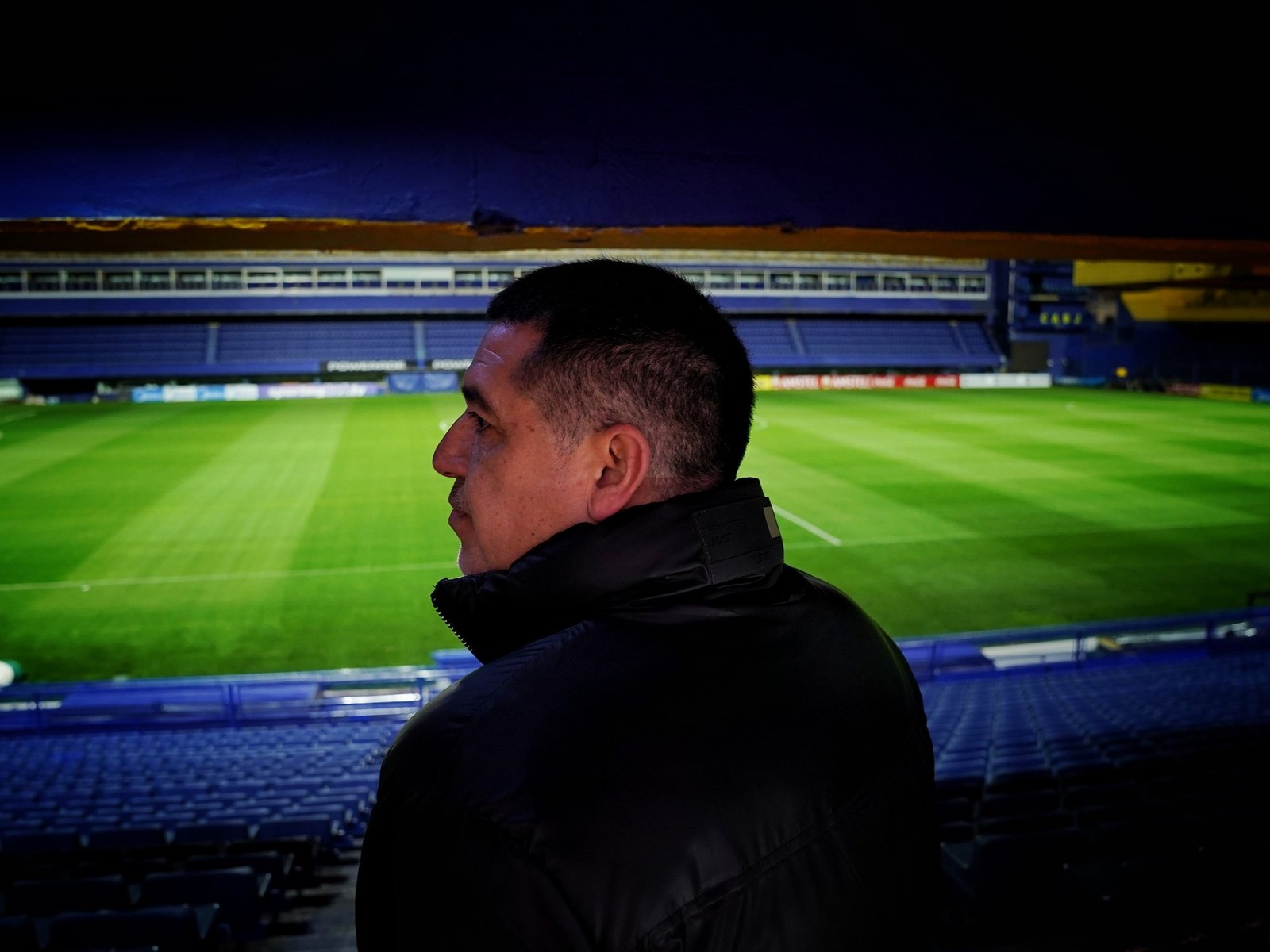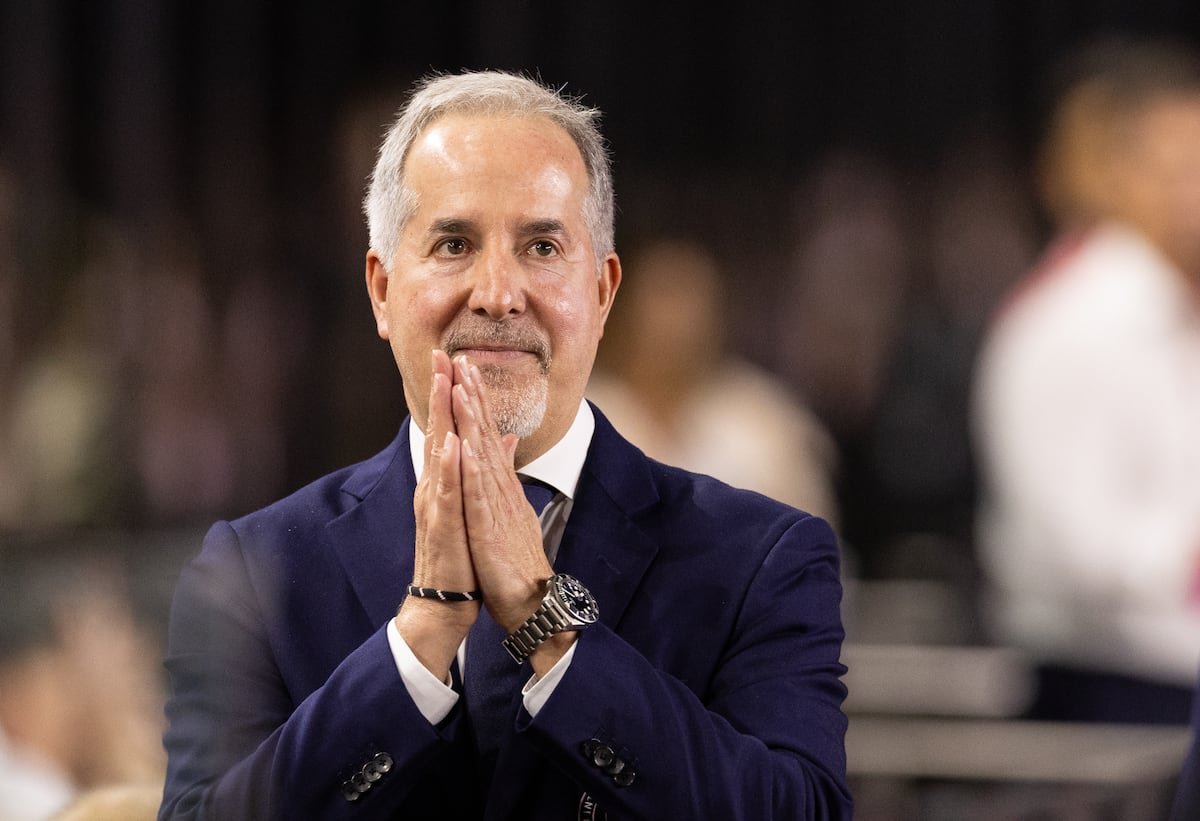
Jorge Mas Santos (Miami, 63) is a leading figure of the Cuban exile community in the United States. He is so by inheritance —as the son of the historic Jorge Mas Canosa, who died in 1997 and championed the Helms-Burton Act that tightened the American embargo against the island— and by his current standing: president of the Cuban American National Foundation, majority shareholder of the engineering and infrastructure company MasTec, which trades on the New York Stock Exchange, and owner of Inter Miami, the club that brought Lionel Messi to the city in 2023.
He wants to remain a leading figure going forward as well, by laying out possible scenarios for a post-Castro Cuba —a task he has intensified since the military operation in which the United States captured Venezuelan president Nicolás Maduro in January. That moment marked the beginning of unprecedented pressure from Washington on Havana through the method of oil strangulation, which has pushed the island to the brink of collapse and brought its leaders to the negotiating table —including, in an extraordinary image, face to face with CIA director John Ratcliffe, who visited Havana last Thursday in a gesture that Mas reads as “part of a very clear strategy by President Donald Trump and Secretary of State Marco Rubio.”
The day after that meeting, Mas spoke with EL PAÍS over the phone from Miami. He had previously shared two documents. One is titled “Roadmap for a Prosperous, Democratic and Free-Market Cuba«, and proposes, among many other points, modernizing the island’s banking system, eliminating income tax, promoting tax exemptions for companies with at least 10% domestic capital participation, and prioritizing the pharmaceutical, military, and heavy industry sectors.
The other is a draft “Fundamental Law for the democratic transition.” Drafted in collaboration with the Cuban American Bar Association, it is an exercise in comparative law: 28 pages long, with the appearance of a constitution: a preamble, 115 articles, and nine transitional provisions.
Better known for his wealth and his sporting and business ventures than for his political involvement, the apparent imminence of change in Cuba has drawn Mas —who has never set foot in Cuba but hopes to do so soon— into a process in which, he says, he is aligned with and working alongside the U.S. government. “Everything is moving very fast. We are talking about months,” he warns.
Question: How many months?
Answer: It could happen from one day to the next. I estimate before the end of summer. Maybe not even that long. We will see changes within weeks. The situation is unsustainable. The system does not work. [Cuba] is a failed state, incapable of providing its citizens with basic things: food, electricity, water —let alone opportunity, dreams, work, a future.
Q: Trump has said he will wait until he has “finished with Iran” before “taking Cuba,” though that crisis seems entrenched —and yet this week everything seems to have accelerated in his Cuba strategy.
A: The president and Secretary Rubio have said they will give [the regime] a chance, but it is clear they do not believe it is capable of the change that is needed.
Q: Do you rule out military intervention?
A: That is not for me to decide, or even weigh-in on —but I don’t think any option can be ruled out when it comes to Cuba.
Q: You traveled to Washington in March and, as owner of Inter Miami, the league champions, met with Trump. Cuba came up. What did you take away from that conversation?
A: In private, we had conversations about the island. Rubio, as you know, is one of ours here in Miami. Our friendship goes back almost 30 years. We are all rowing in the same direction and are very, very aligned on what Cuba needs to prosper.
Q: Rubio has spoken of the possibility of economic change alone. But on Wednesday he expressed skepticism on Fox News about “altering Cuba’s trajectory while those people are still in charge.”
A: Their incompetence [that of the Castroist regime] makes a complete political change of leadership necessary. Economic reconstruction obviously has to be preceded by the establishment of the rule of law. In reality, you have to start from practically zero, because the system and the political structure do not work. Outside the island there is an extraordinary capacity to contribute to that reconstruction, as proven by the Cubans who have succeeded here —starting with Rubio.
Q: What do you propose to bridge that economic and social gap between Cubans on the inside and those on the outside?
A: All of this is for the benefit and wellbeing of Cubans on the inside. Obviously, those of us on the outside can contribute knowledge, effort, work, and financial resources. I am a great believer in the island’s future —and in the fact that that future goes beyond building hotels and beach tourism. You have to start by rebuilding the infrastructure: ports, airports, as well as civilian governance in cities and municipalities. The healthcare system also needs to be made to function.
Q: Your roadmap envisions a healthcare system based fundamentally on private initiative. Would it resemble the American model?
A: No, it is a combination of models. There need to be private actors, but with a universal social entitlement. They can be private systems, but at no cost to the citizen —people would access vouchers, paid for by the state. It is a hybrid that exists in many countries. The American system, as we all know, does not necessarily work.
Q: Your “fundamental charter” —is it a draft Cuban constitution?
A: It is a legal framework designed to respond to the great interest of many foreign investors who want to help rebuild. These are suggestions for the economic sphere, but also for human rights, to enable a transition toward free elections and a new constitution. Cuba must become a rule-of-law state.
Q: Will this new Cuba resemble the one that existed before Castro came to power [when the dictator Fulgencio Batista was in charge]?
A: No. There is no point in going back to that: it is a different world. My aspiration is for it to be a first-tier technological country, one of the most open economies in the world. We have at our disposal the world’s largest consumer market: the United States. Cuba has to benefit from that. It will be a modern economy, a democratic, pluralist system of government with multiple political parties. I speak of the Cuban economic miracle —a country that resembles nothing from the past and looks toward the future.
Q: What would its relationship with the United States look like? There is the economic potential, but also the risk of domination through business at any cost. The shadow of the protectorate.
A: I see the United States as a great ally. A third of the Cuban population is here. We are brothers, and we can be first-rate trading partners. I am not worried about the United States, because it is a country of extraordinary greatness. It is not perfect —no country is— but it proved, with my parents’ generation, who arrived here with nothing, that it is capable of opening its arms and welcoming us.
Q: Could Cuba become the 51st state of the United States, as the more imperialist strain of Trump’s thinking fantasizes about with Canada or Venezuela?
A: That is premature. I don’t rule it out, but the future has to be determined by Cubans. They must be given that option —and others— through the ballot box.
Q: And do you envision a scenario of tutelage like Venezuela’s —a Cuba run from Washington with some version of Castroism still nominally in power?
A: The circumstances of Venezuela and Cuba are very different. In Cuba there are no functioning structures or institutional forces. A complete change of leadership is needed, and it can come from within. What happened in Venezuela was right for Venezuela, but it will not work in Cuba, which is a failed state.
Q: Since you don’t see a Cuban Delcy Rodríguez in the picture, who would be Cuba’s María Corina Machado?
A: There are many, inside Cuba. Right now they cannot speak freely to the people without putting their lives at risk. That is the difference. In Venezuela you could have a Machado, or elections that she won. In Cuba, no —but there are many people who could become the future María Corina Machados.
Q: Would you support putting Castroism on trial?
A: Those are decisions for a council of Cubans to make. The best thing that can happen to Castroism is for it to be buried like a dinosaur from the past.
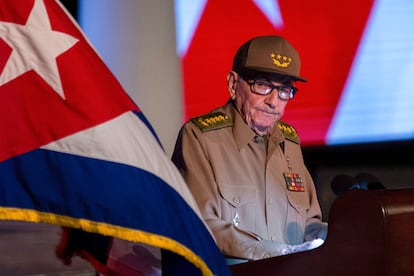
Q: A judicial indictment of Raúl Castro, at 94, appears imminent…
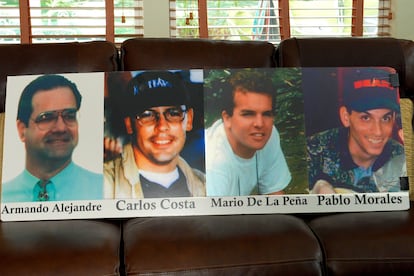
A: I am expecting an announcement on the indictment on Wednesday. And it is right. From the foundation we have pushed for it, because it is deserved —to deliver justice to the families of the [exiles] whose two aircraft of Hermanos al Rescate were shot down [in 1996]. Whatever the case, it is a decision for the U.S. Department of Justice. We shall see.
Q: How do you bring out all the submerged economy that exists on the island?
A: Cuba’s economic reconstruction I see as not just achievable but super easy. You need to create a legal framework where the market prevails, where the Cuban people are the beneficiaries, and where foreign investment is incentivized. With the exile community alone —and here I speak for myself, as someone with a fairly large company [with a market capitalization of around $32.7 billion]— the capital needed to rebuild Cuba is not hard to raise. Whether it takes 40, 50, 60, 70, or 80 billion, whatever the figure, it will not be a problem.
Q: Will that money come from the exile community?
A: Without a doubt —but it will also help that Cuba opens up to the world. Investment funds will contribute significantly as well. Cuba will not lack capital or economic resources for its reconstruction, so long as there is a system that protects those investments.
Q: Is the exile community united?
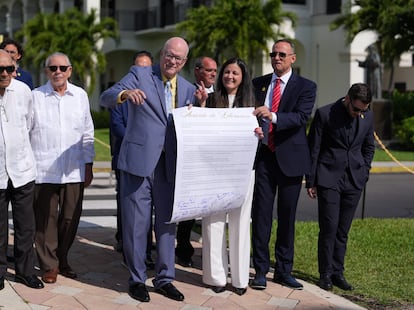
A: I have been at this for many years. There has never been a relationship as close and as coordinated as the one that exists today. Rosa María Payá [Pasos de Cambio], Orlando Gutiérrez-Boronat [Cuban Resistance Assembly], and others who have led some of the most recognized organizations are in constant communication. We all hope this is the final stretch.
Q: And if it isn’t?
A: Since I got deeply involved in this, it has been a road full of disappointments. When the Soviet Union fell, when Fidel Castro died, when Raúl stepped down… Many times, Cuba’s freedom seemed just around the corner. We never give up. I am a man of faith, and this path is dictated by God —we are instruments of that.
Q: Have you ever seen it feel this imminent?
A: Never —thanks to the conviction and leadership of President Trump and Secretary Rubio. They have set themselves to the task of delivering on what they promised.