Night had fallen on Wednesday, and the three of them were in the kitchen after spending the holiday at the beach. William Vera, a 24-year-old chef, had traveled from Caracas to Venezuela’s Caribbean coast to spend the day with his girlfriend and her mother in a beachfront apartment. They had known each other only a short time, but they were already making plans for the future. She was selling her beach apartment to move to the capital, closer to him. They had spent the holiday swimming in the sea and had returned home only to pick up the dog, a sick puppy William did not want to leave alone. They planned to grab something to eat before heading back to the beach. It was 6:03 p.m.
The first jolt came barely a minute later. It tore a hole in the ceiling, and a refrigerator from the apartment above crashed down onto William’s mother-in-law. The ground was shaking violently. William and his girlfriend staggered toward the door, but a washing machine blocked their path. Seconds later—the 39 seconds separating the magnitude 7.2 quake from the 7.5 aftershock—the wall collapsed on top of them, trapping them beneath the building. The story has been pieced together by Jhon Da Silva, 34, William’s best friend, who would pull him from the rubble the following day.
Venezuela had not experienced anything like it in more than a century. It was a double seismic blow: two nearly consecutive earthquakes centered in Yaracuy State, in the north of the country. They struck during the Carabobo Battle holiday, when much of the country’s commerce was closed and the beaches along the coast were packed with residents of Caracas celebrating the Feast of Saint John.
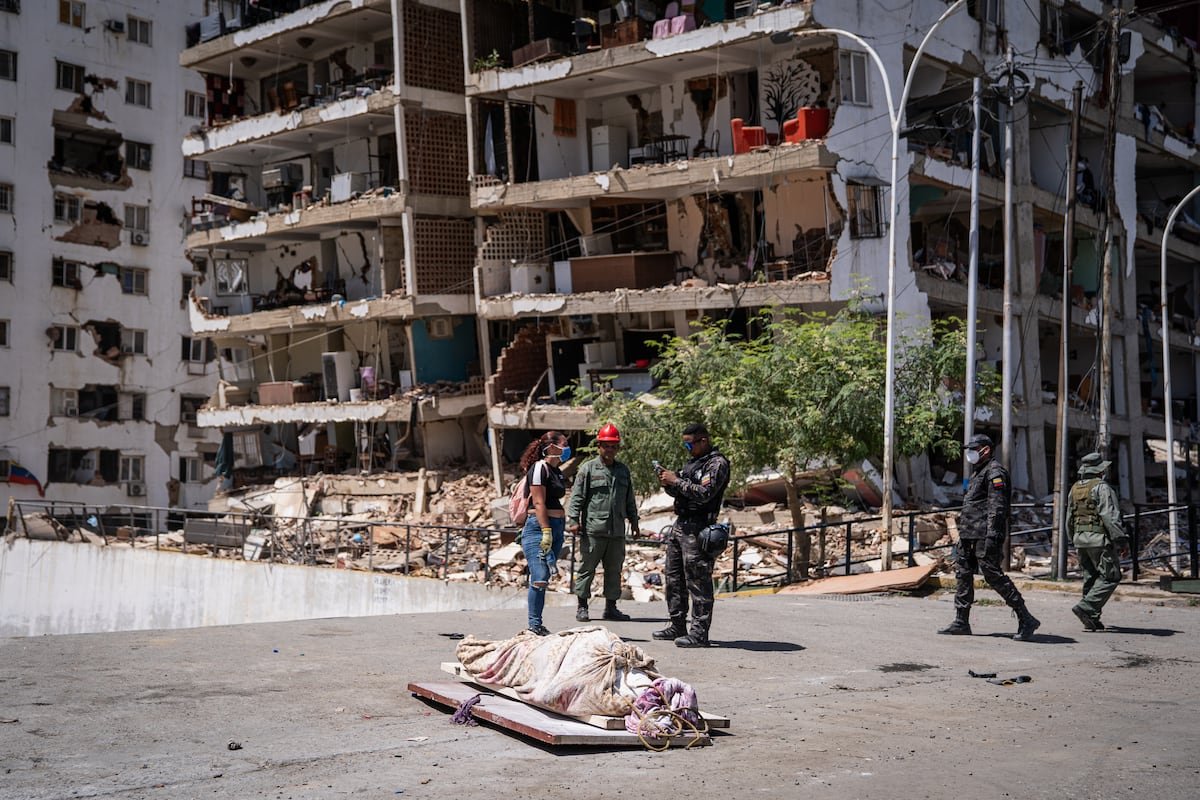
La Guaira State—formerly Vargas—was the hardest hit, with more than 100 buildings reduced to rubble and an as-yet undetermined number of casualties. Maiquetía International Airport, the country’s main international gateway, was forced to close because of severe structural damage. The runways, the roof, the terminal building—almost everything collapsed.
The official death toll began Wednesday night at 32 and has climbed relentlessly: 164, 235, 589, 920. By Saturday it had reached 1,430. Authorities expect those figures to continue rising in the coming days because large-scale debris removal has not yet begun. Beneath the ruins may lie hundreds more victims. Some may still be alive. On Friday night, more than 48 hours after the collapse, rescuers pulled a man and his dog alive from the wreckage of a building in Caracas.
The coastal highway through La Guaira had become a continuous scene of devastation. Nowhere more so than in Caraballeda, ground zero, where the military and international rescue teams had cordoned off the area and where the majority of buildings had been ripped open. Towers more than ten stories high lay crushed like mille-feuille pastries made of steel and concrete. Beachfront residential complexes were reduced to nothing more than their entrance gates. Beyond them, there was only ruin.
The smell of death hung in the air. Residents gathered on sidewalks beside the mattresses and refrigerators they had managed to salvage. Standing atop the mountain of debris that had once been an apartment building, a rescuer raised a finger to his lips, signaling for silence. Looking down at the crowd, he called out, “I think there’s someone here!” His voice barely reached those below. Unable to locate the source precisely, he eventually climbed down. He needed reinforcements, search dogs, and more resources to save additional lives.
William and his girlfriend spent the entire Wednesday night trapped beneath the rubble. Sometime before dawn, she said she could not hold on any longer and fell silent. William lost consciousness until voices searching for survivors woke him the next morning. Among them was Jhon, frantically removing chunks of concrete. William shouted back.
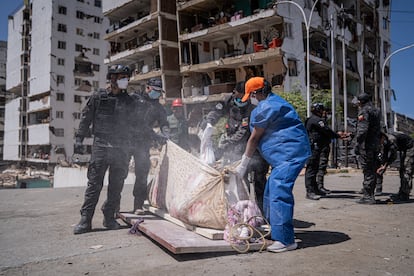
“There were no authorities,” Da Silva recalls. “So it was us—his friends—who got him out. We used a door as a stretcher, tied him onto it, loaded him into a car, and drove him to the hospital.”
That scene—neighbors digging with their bare hands, without helmets or masks, improvising stretchers from doors and wooden planks—played out all along the coastline during the first hours after the disaster. The same happened in the two hardest-hit neighborhoods of Caracas, where several apartment towers collapsed.
Three days after the twin earthquakes, Caracas has settled into an uneasy normality. While many buildings have sustained damage, destruction is concentrated in only a handful of neighborhoods. La Guaira, by contrast, has become a disaster zone, as Venezuela’s acting president, Delcy Rodríguez, herself described it.
Among the victims are more than one hundred Venezuelans who had been deported from the United States earlier that same day and were housed in a hotel that later collapsed. They died on the very day they were forced to return to the country they had fled.
“There were 135 of us repatriated, and only 12 survived. Everyone else died,” one survivor said in a video widely shared on social media.
The city’s sports complexes now shelters hundreds of displaced people—and their pets—sleeping on the ground beneath military tents. Dozens of children are among them. Donated clothing has formed mountains across the soccer field, gradually soaking in the mist, while private citizens arrive in pickup trucks delivering food. No one appears to be coordinating the relief effort.
On Friday, the president of the National Assembly, Jorge Rodríguez, urged citizens not to travel to La Guaira so as not to interfere with rescue operations—a request echoed by his sister Delcy. Nevertheless, the only highway connecting Caracas to the coast became clogged with thousands of motorcycles, cars, and trucks.
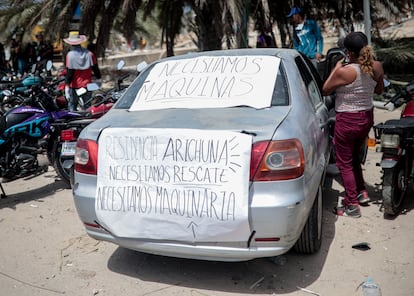
Excavators, water, food supplies, generators, shoes, mattresses, medicines, soldiers, rescuers, ambassadors—everyone headed toward the disaster zone. As in many catastrophes, help from ordinary people arrived before assistance from the state. Yet there was no one to organize it, and spontaneous solidarity ended up blocking access routes. Security forces directed traffic erratically and, at times, only made matters worse. Amid the chaos, ambulances were unable to get through.
No authority had thought to reserve an emergency lane. Collection centers had been established, but no one required donations to be left there, so most people chose to drive directly to the coast with their supplies.
The same Chávez-era state apparatus that once monitored virtually every WhatsApp message critical of Nicolás Maduro—before his capture by U.S. authorities on January 3—proved incapable of guaranteeing an emergency corridor during a national disaster.
Only after the situation had spiraled out of control did Interior Minister Diosdado Cabello announce that access to La Guaira would be closed. The state was declared a militarized zone, and only authorized personnel would be allowed in. Yet by Saturday morning the highway entrance was once again hopelessly congested. Forensic teams, police officers, doctors, ambulances, heavy machinery—all were trapped in traffic.
Meanwhile, Jhon and his friends struggled to transfer William from one medical facility to another.
At the hospital he had been treated on the floor because there were no available stretchers, then placed on a table for emergency surgery on his arm. The collapsed wall had crushed it so severely that blood circulation had stopped. He had also suffered a head injury and severe abdominal trauma.
Eventually they paid about $500 for an ambulance that had once belonged to the public health system but had since fallen into private hands and was rented to whoever could pay the highest price.
When they arrived at a private clinic—despite the government’s appeal for private hospitals to cooperate during the emergency—they were told treatment would not begin until payment was made. Doctors informed them that William’s arm would have to be amputated. From there, he was transferred to a military hospital.
“They weren’t prepared for anything like this. My friend was bleeding out while telling me everything from the stretcher,” Jhon remembers.
William, his face badly swollen, recounted the scene in the kitchen, the puppy, and the overwhelming guilt he felt. If they had stayed at the beach, he said, none of it would have happened. But he had been “the stubborn one” who insisted on going back for the dog.
From his hospital bed he sent voice messages to his seven-months-pregnant sister and to his mother. In the first, speaking clearly, he urged his sister to stay calm, take care of herself, and not worry about him. His “body was broken,” he said, “but I’m a Viking. I’ll survive.”
In the second message, he told his mother that he wanted to see her again.
“I’m already at the hospital, and they’re going to take good care of me,” he said.
Venezuela confronts this catastrophe in the midst of a humanitarian, political, and social crisis that has dragged on for years.
More than a quarter-century of Chávez-era rule has hollowed out state institutions. The country ranks as the third most corrupt in the world on the Corruption Perceptions Index, ahead of only Somalia and South Sudan, while public services have largely collapsed.
Even before the earthquake, only four out of every ten operating rooms were functional, and in nine out of ten hospitals patients were expected to provide their own medical supplies before undergoing surgery, according to the National Hospital Survey conducted by Médicos por la Salud.
The country also remains under U.S. oversight following Maduro’s capture in January. Washington not only influences Venezuela’s sovereign decision-making but also controls access to much of its financial resources.
Even amid the emergency, Caracas cannot freely access billions of dollars in oil revenues. The White House temporarily eased sanctions to permit rescue logistics, humanitarian transfers, and even funds from third countries, but the remainder of the country’s assets remains frozen.
As more than twenty international rescue teams arrive in Venezuela, “the United States still has its foot on the country’s neck, denying it the resources needed not only for social programs but also to confront a crisis like this,” said one foreign observer who requested anonymity.
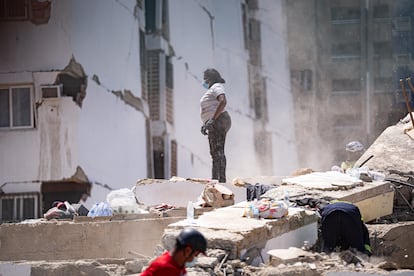
In recent days, the phrase “Only the people save the people” has resurfaced. It was heard after Mexico’s 2017 earthquake and echoed across Spain in October 2024, when devastating floods buried Valencia in mud and volunteers reached victims before the military and government assistance.
Here, the military is present. They have established field hospitals. Yet in a country as heavily militarized as Venezuela, where stability has long been said to depend on the armed forces, it is striking that soldiers are neither leading operations nor working with the urgency many expected.
In one of Caracas’s hardest-hit neighborhoods, a major directed volunteer traffic while groups of young soldiers stood by. The people removing rubble were civilians.
In 1999, shortly after taking office, Hugo Chávez deployed the military to evacuate tens of thousands of victims after the Vargas mudslides—the very same region now devastated once again—and projected an image of firm military leadership and complete control over the armed forces.
Twenty-seven years later, the acting president again placed a general in charge. Yet military authority does not dominate the scene. It remains unclear who is actually in command.
Across the rubble, it is the neighbors who continue digging.
Outside Caracas’s morgue on Friday, William’s mother sat quietly on a curb.
Dozens of families waited nearby for permission to collect the bodies of loved ones. Local residents brought them sandwiches.
She did not feel strong enough to speak, but she encouraged Jhon to tell her son’s story while William’s body still awaited release on Saturday morning.
William fought for hours like the Viking he had promised he would be. In the end, however, he did not survive.